
Did you know that the planets zigzag across the sky?
It’s called retrograde motion, and you can actually chart it with your own camera over the course of a month or two for yourself.
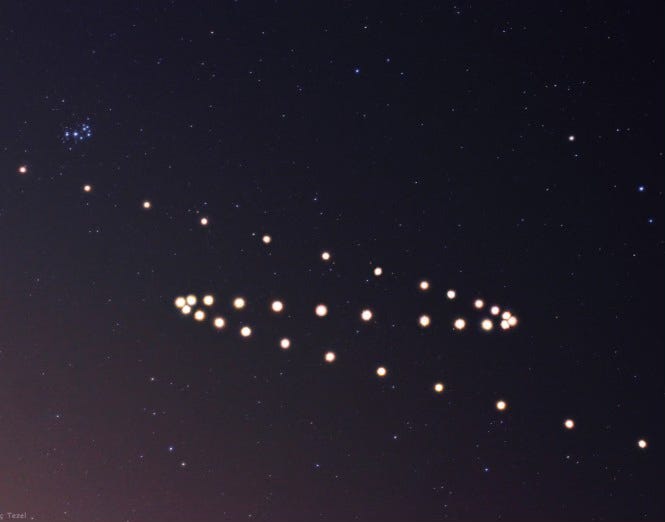
I wonder whether the ancients looked up at Jupiter and said, “Look at Zeus—changing his mind again! Chasing another nymph here and there! Who knows where he will wander next?”
The Greeks gave these heavenly bodies the name planētēs—meaning “wanderers”—because, unlike the stars who remain fixed in the heavens, the planets range about, moving and doubling back. Ironically, they associated the five planets they could see with their greatest gods. And Zeus, chief of the gods, they identified with the most fickle of them all: Jupiter.
In Homer’s Iliad, Zeus’s indecision lies at the bottom of a ten-year stalemate on the shores of Ilium. He seems unwilling to do what he has promised. And as he waffles back and forth about the fate of Troy, noble Greeks and Trojans rise daily to slaughter one another by the thousands.
Homer faults Zeus—his total lack of self-control is depicted as a shortcoming. In Book XIV, Aphrodite and Hera know that direct confrontation with the son of Cronus is futile, so they outflank him with seduction. Mad with distracting passion, Zeus confesses,
“. . . how I hunger for you now—irresistible longing lays me low!”
Homer makes no excuse for Zeus’s utter intemperance. It is the great god’s nature to be enslaved to various passions and pleasures. And it leads to calamity for the Trojans who are dependent on his vigilant protection.
The Iliad presents such a unique contrast: Hector, tempted by his wife to ignore the battle and stay home in bed with her, exercises temperance and does his duty. Zeus, tempted by his wife, gives in with no fight—and abandons Hector to the onslaught of Greece’s finest.
Homer’s cosmos is upside-down. Zeus of heaven wavers while Hector of earth remains faithful and true. What hope has Hector when Jupiter is in regular retrograde motion?
In a world filled with “slaves to various passions and pleasures” we do not need a God who mirrors our inconstancy with his own in the sky. We need one controlled by his own goodness, driven by his own loving kindness to intervene and to save (Titus 3:3-4).
Making Planets Zig and Zag!
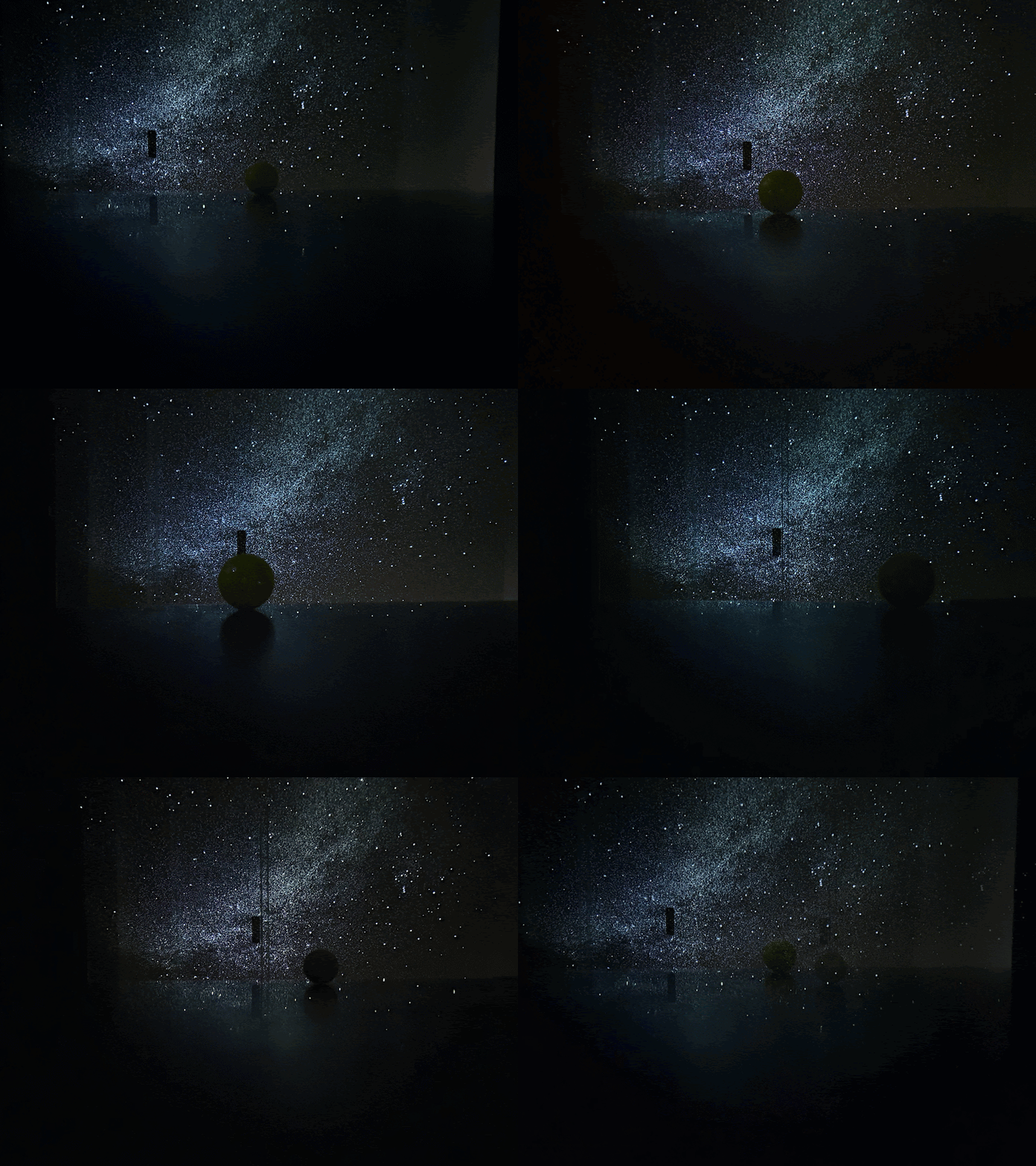
Our astronomy students succeeded in recreating the appearance of retrograde motion this morning with a pickleball, pingpong table, camera, and our planetarium. The pickleball is Jupiter, and the outer ring is its orbit. The inner ring is earth’s orbit which the camera follows to capture our perspective looking at Jupiter against the starry sky:
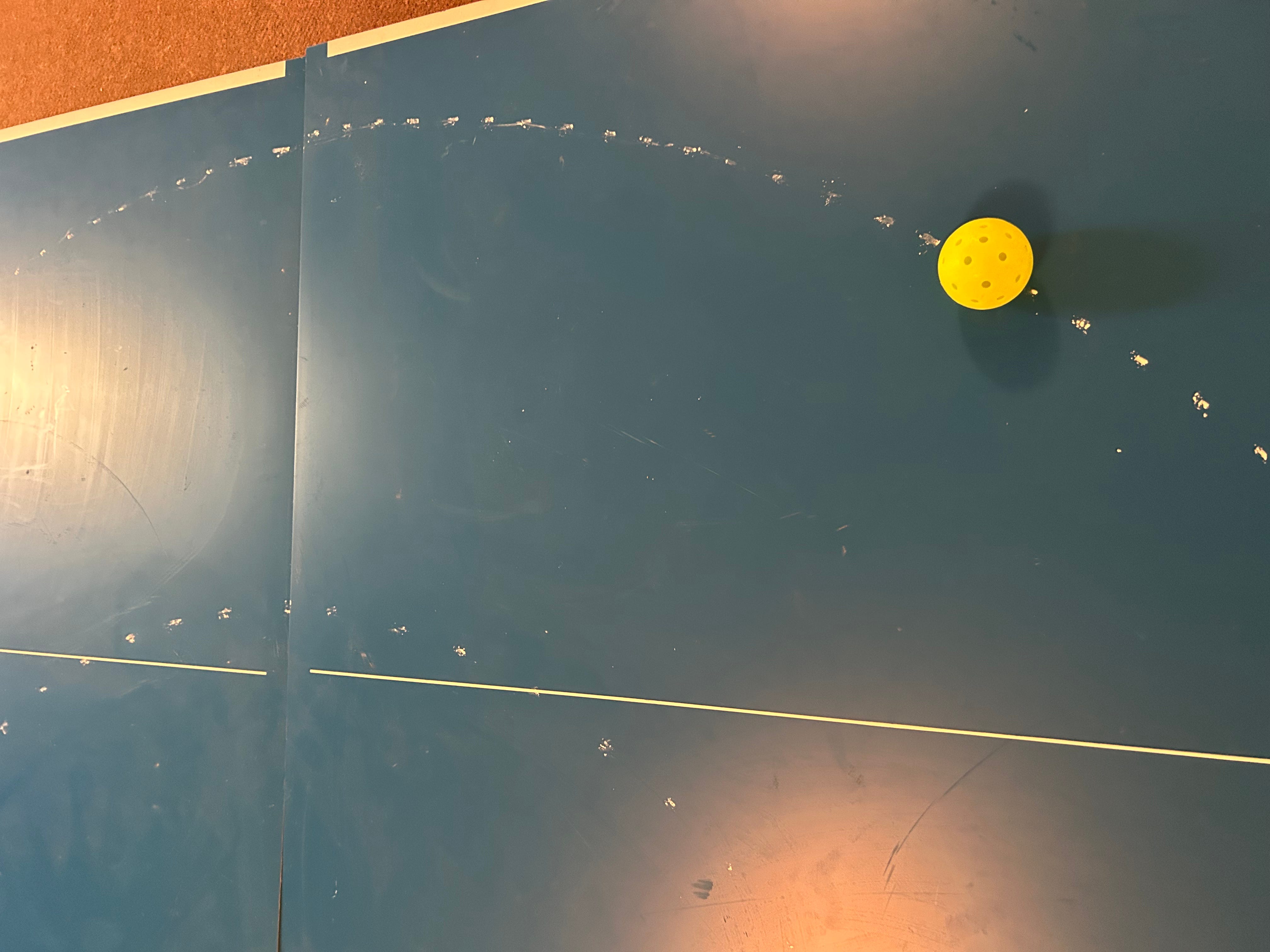
Obviously, we now know the planets don’t actually change course in their journey through the heavens. What appears as zigging and zagging is an optical illusion created when planet Earth “laps” a slower-moving planet like Jupiter as we orbit around the sun in the same direction. Watch the planet below appear to move backward: I swear, it’s moving forward in its orbit the whole time!