

Let me begin by saying I have a very low bar of expectations with any online discussion these days. I don’t expect any of it to be edifying. Nevertheless, we have to talk about Bad Bunny—or rather, what the meta-narrative surrounding this year’s Super Bowl halftime show has revealed.
Honestly, I don’t even really care what has been said online about Bad Bunny. It was what my own kids and students—who had never heard or heard of Bad Bunny before this month—had to say before the performance even happened that concerned me.
Clearly, they’d picked up opinions from peers and others: “He doesn’t even sing in English!” “This is an American event—he doesn’t belong!” “Apparently they asked the football players, and none of them knew who he was!”
The kids were categorically dismissing an artist before ever encountering his art.
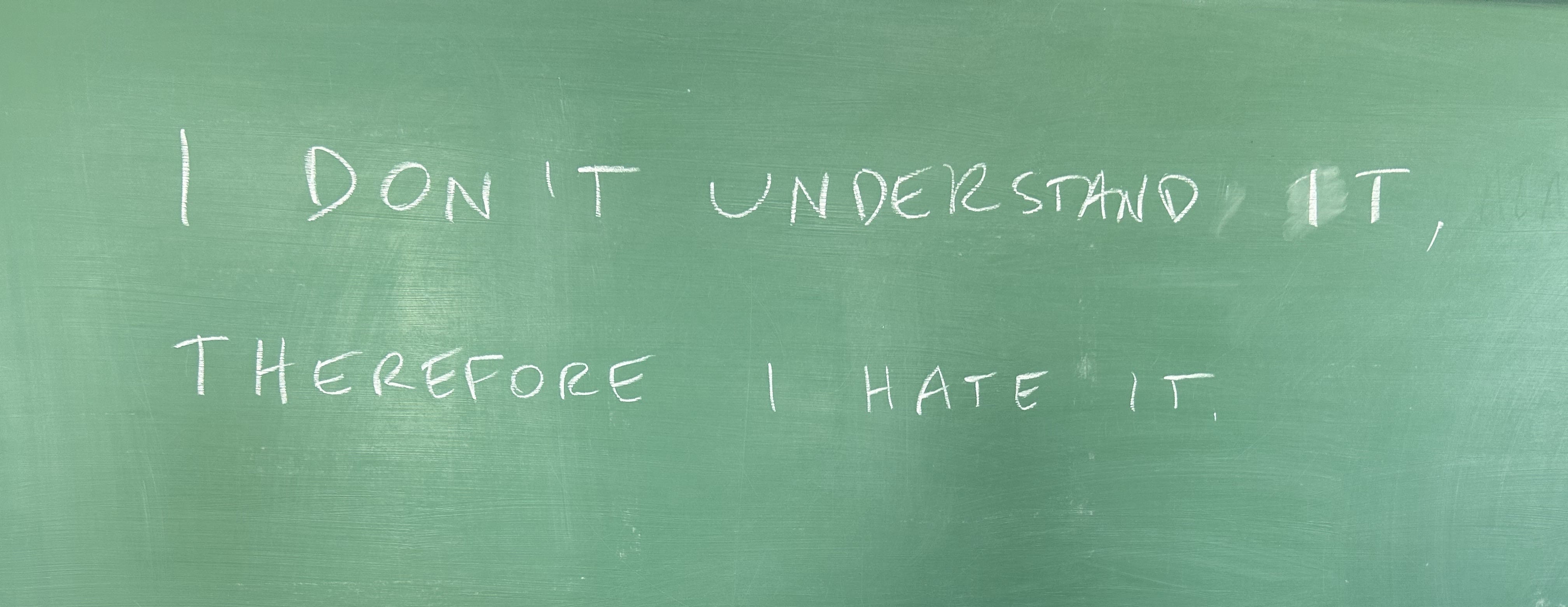
It reflected what I saw online. And it all made the teacher in my wince. Because the attitude that says “I hate Bad Bunny” is the same one that also says “I hate math” and “I hate reading” and “I hate classical artwork” and “I hate Latin.”
It’s a coping strategy we develop from a young age. Whenever we encounter something strange, complex, unfamiliar, or challenging:
It’s basic prejudice—toward what is familiar and comfortable. And it’s the death of learning.
Hatred becomes a shield preventing us from encountering anything foreign. Allowed to take full root, this “I don’t understand it, therefore I hate it” mentality bears the fruit of total insularity: no thought, person, or reality is allowed in unless it agrees 100% with my prior experience, preferences, and knowledge.
As teachers, it’s this particular reflex we seek to upend. T. David Gordon puts it this way:
“The barrier to education is the student himself—his parochialism, his laziness, his reluctance to abandon his current viewpoints, his resistance to disciplined intellectual effort, his complacent self-satisfaction with his present attainment and understanding. . . .
What capable educators have always attempted to do is to infect their students with a love of learning and a hatred of parochialism.”
This is the stunt we are trying to pull in the classroom one student at a time: turning “I don’t understand it, therefore I hate it” into “I don’t understand it, therefore I’m curious.”
You don’t have to like Bad Bunny. But wouldn’t you like to be the sort of person who is initially intrigued by a Spanish artist rather than immediately repulsed? Curiosity is a habit just like all the rest—and so is ignorance. Every time we choose hatred instead of curiosity, we shrink our world just a little bit more.
Curious Cookbook
Are you up for some curious new recipes? Jerusalem by Ottolenghi will have you putting cinnamon and cumin on your fried chicken and berries in your rice. A few years ago, I called a friend to recommend the cookbook, and he already had it—said he was going to call me about it. That’s when you know a true friend.


